

Blog
Underestimated climate risks could undermine global financial system, warn actuaries and scientists
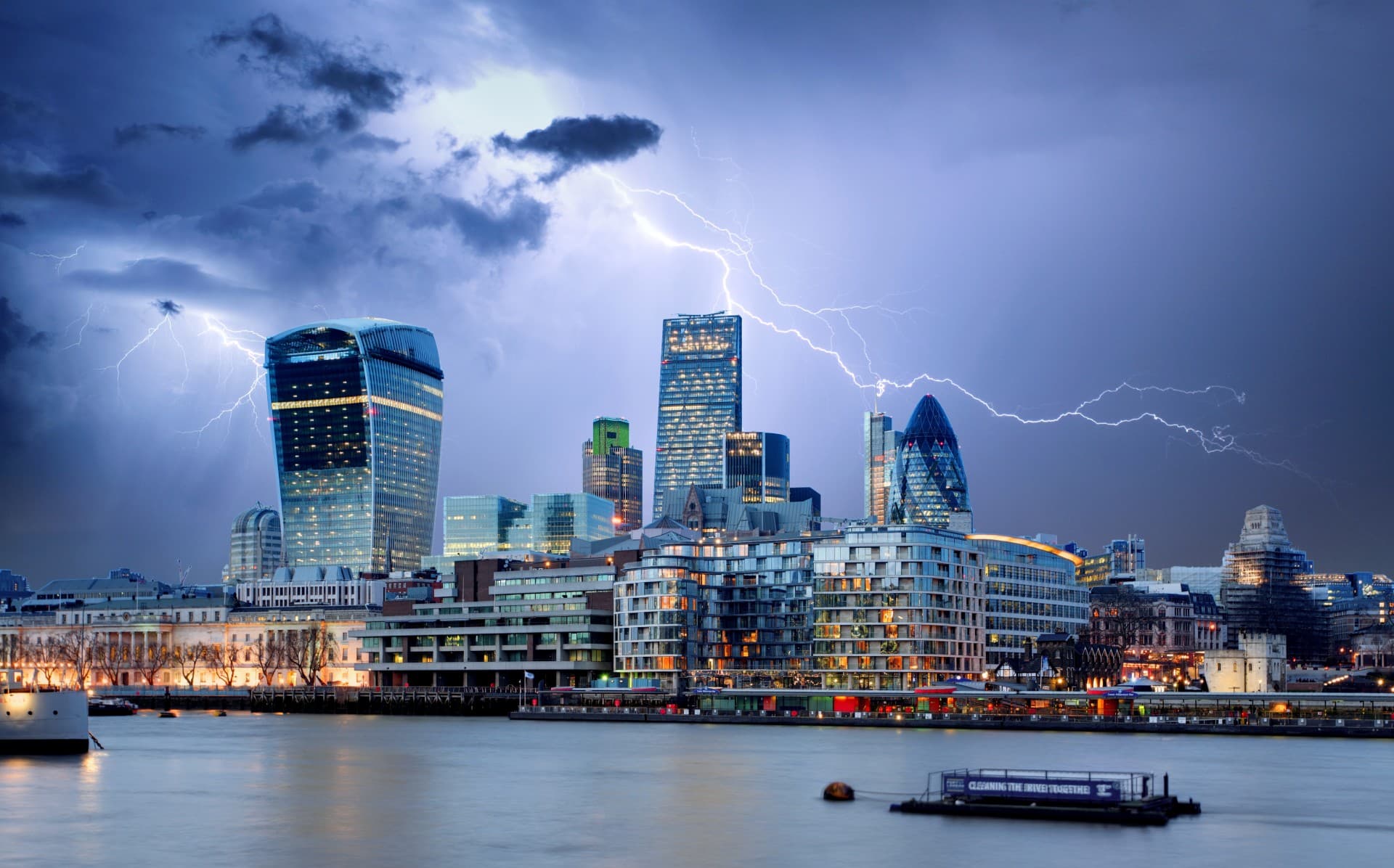
Policymakers and financial institutions are underestimating climate risks that could undermine the global financial system, according to a new report from the Institute and Faculty of Actuaries (IFoA) and University of Exeter (UofE).
Written by Ben Dickenson Bampton
The Parasol Lost report warns that global temperatures are accelerating faster than predicted, driven by a loss of ‘aerosol cooling’, a hidden sunshade effect created by air pollution which has offset around 0.5°C of warming. This hidden sunshade is now receding as pollution is being cut down, particularly by shipping regulations.
The faster rate of warming is also explained by the Earth’s sensitivity to greenhouse gases (‘climate sensitivity’), which recent studies suggest could be towards the upper end of scientific estimates.
The report warns that, without action, global warming is now likely to reach 2°C before 2050, a level associated with catastrophic impacts on societies and economies worldwide – with major disruption to water and food systems, migration, and human health.
This raises the risk of climate-driven inflation, financial shocks, and the withdrawal of insurance from high‑risk areas much sooner than many expect which, in turn, increases the chance of widespread financial instability and ‘Planetary Insolvency’ – the risk of societal and economic collapse from the loss of nature’s critical support systems.
Download the 'Parasol Lost' Report

The joint report – the fourth in a series from the IFoA and UofE – also draws attention to a legacy of economic modelling that has downplayed the impact of climate change on economies, leading to complacency and delays in policy change.
Previous economic estimates predicted climate damages to be as low as 2.1% of global GDP for a 3°C rise in temperature and only 7.9% of global GDP for a rise of 6°C, but the methodologies used excluded many of the most material risks that are faced. In contrast, recent analysis from the UK’s Climate Financial Risk Forum suggests that firms could consider as plausible, a severe combined climate and nature shock scenario causing a 15-20% contraction in global GDP over a five year period.
This gap is largely due to mainstream economic forecasts excluding many of the risks that scientists now anticipate, such as sea-level rise, ocean acidification, tipping points, nature degradation, human health impacts, or conflict and migration.
The authors draw parallels with the Global Financial Crisis, underscoring the fact that risk models then could not see the accumulation of system-level risks, leading to risk underestimation, misplaced confidence, and the systemic collapse of 2008.
Sandy Trust, lead author and Sustainability Board Member, Institute and Faculty of Actuaries, said:
“Planetary Solvency is threatened, and we urgently need a recovery plan. An actuarial review of key climate change assumptions shows we may have seriously underestimated the rate of warming as well as the related economic impacts. Unless we rapidly change course, climate damages will start to impact growth and future prosperity. The parallels between the risk management failure of the Global Financial Crisis and inaction on the major systemic risk posed by climate change are clear. Both feature an over reliance on benign risk model results and a failure to understand systemic risk.”
Paul Sweeting, President of the Institute and Faculty of Actuaries, said:
“Actuaries specialise in understanding and managing risk, and the cooperative spirit of our profession drives us to serve society as a whole. The stark findings of this report highlight the urgent need to continue working in partnership with policyholders, governments, scientists, and other key stakeholders, to help address the root causes of the climate crisis and safeguard the wellbeing of all communities.”
Sir David King, Founder and Chair, global Climate Crisis Advisory Group, said: “Policymakers now need to execute a Planetary Solvency recovery plan – congruent with the Climate Crisis Advisory Group’s 4R planet strategy – that changes our trajectory away from the high-risk zone. Action is required to radically accelerate societal adaptation to a changing climate, supercharge the pace of the energy transition, and remove excess greenhouse gases already in the atmosphere. Economically, it will be overwhelmingly positive to do so.”
Dr Jesse Abrams, report author and Senior Impact Fellow at Green Futures Solutions, University of Exeter, said:
“We are entering a new reality of a 1.5° world, where intense physical risks are now threatening economies, living costs, and financial systems, and catastrophic tipping points are on the horizon. Today, we can already observe the economic cost of these climate impacts; in the US alone, billion-dollar climate disasters now take place every 19 days, compared to every 82 days in the 1980s. As the rate of warming accelerates, these climate shocks are now likely to arrive faster, bringing more immediate and intense impacts to our economies that policymakers and markets must be prepared for.”
Recommendations
More Information
The ‘Parasol Lost’ report is the fourth in a series of collaborative reports from the Institute and Faculty of Actuaries (IFoA) and the University of Exeter (UofE). Previous reports in this series include: The Emperor’s New Climate Scenarios (2023), Climate Scorpion (2024), and Planetary Solvency (2025).
The Institute and Faculty of Actuaries is a royal chartered, not-for-profit, professional body. Research undertaken by the IFoA is not commercial. As a learned society, research helps us to fulfil our royal charter requirements to further actuarial science and serve the public interest.
The University of Exeter is home to over 1,500 climate and environmental experts, including many of the world’s most influential climate scientists. Through Green Futures Solutions, we help organisations access this expertise to tackle complex sustainability challenges, build climate resilience, and drive transformative change.
To learn more about our work on climate risk, please contact us.
Related



Exeter Innovation
We are the trusted partner in transformative innovation, empowering organisations across the globe to make ecologically responsible decisions – for today and for future generations.